
Low Down Payment Non-Owner SR-22 — California
Free to compare
California Non-Owner SR-22 Without Six-Month Upfront Payment
You've confirmed you need SR-22 filing to reinstate your California license. You don't own a vehicle. The DMV requires proof of insurance before they'll process your $55 reissue fee. You called three carriers and every quote came back requiring $500 to $800 upfront for a six-month policy — money you don't have right now. You're not asking for free coverage; you're asking for a monthly payment structure that lets you start the SR-22 clock this week instead of three months from now when you've saved enough for the lump sum.
California non-owner SR-22 carriers split into two payment models. The majority require six-month-paid-in-full at policy inception. A smaller subset writes month-to-month policies with down payments under $100. The difference isn't the monthly rate — it's whether you can access that rate without fronting half a year upfront. Knowing which carriers offer true monthly billing changes whether reinstatement is possible this month or three months from now.
“If the carrier's payment screen asks for six months upfront, you're not looking at a monthly-pay policy — you're looking at a six-month term marketed with a monthly rate.”

Get Insured and Get Your California License Back
Get My California Suspended License Insurance Quote$55
California License Reissue Fee
This is the baseline DMV administrative reinstatement charge under California Vehicle Code §14904. It does not include SR-22 filing fees, DUI program costs, or ignition interlock device expenses — those stack on top and vary by suspension trigger.
California Vehicle Code §14904
Why Most Carriers Require Six-Month Upfront Payment
Non-owner SR-22 policies exist for drivers the state considers high-risk. Carriers writing this coverage assume elevated claims probability and payment default risk. To offset that risk, most non-standard insurers require six-month paid-in-full terms at policy inception. This structure protects the carrier's loss ratio but creates a cash-flow barrier for drivers who need coverage to start immediately.
Monthly-pay policies do exist in California's non-owner SR-22 market, but they're concentrated among a small group of carriers willing to accept the administrative cost of monthly billing in exchange for higher premium rates. The monthly rate itself is often comparable to a six-month policy divided by six — the difference is access. If you don't have $600 today but can reliably pay $110 per month, a monthly-pay carrier is your only viable path to same-week SR-22 filing.
The confusion comes from how quotes are presented. A carrier may advertise a monthly rate of $95, but the application form requires payment for months one through six before the policy activates. That's not a monthly-pay policy — it's a six-month policy with a monthly rate used for marketing math. True monthly-pay policies charge the first month plus a down payment under $100, then bill monthly thereafter. The distinction determines whether you can start coverage this week.
If the carrier's payment screen asks for six months upfront, you're not looking at a monthly-pay policy — you're looking at a six-month-paid-in-full term marketed with a monthly rate.
Related Articles



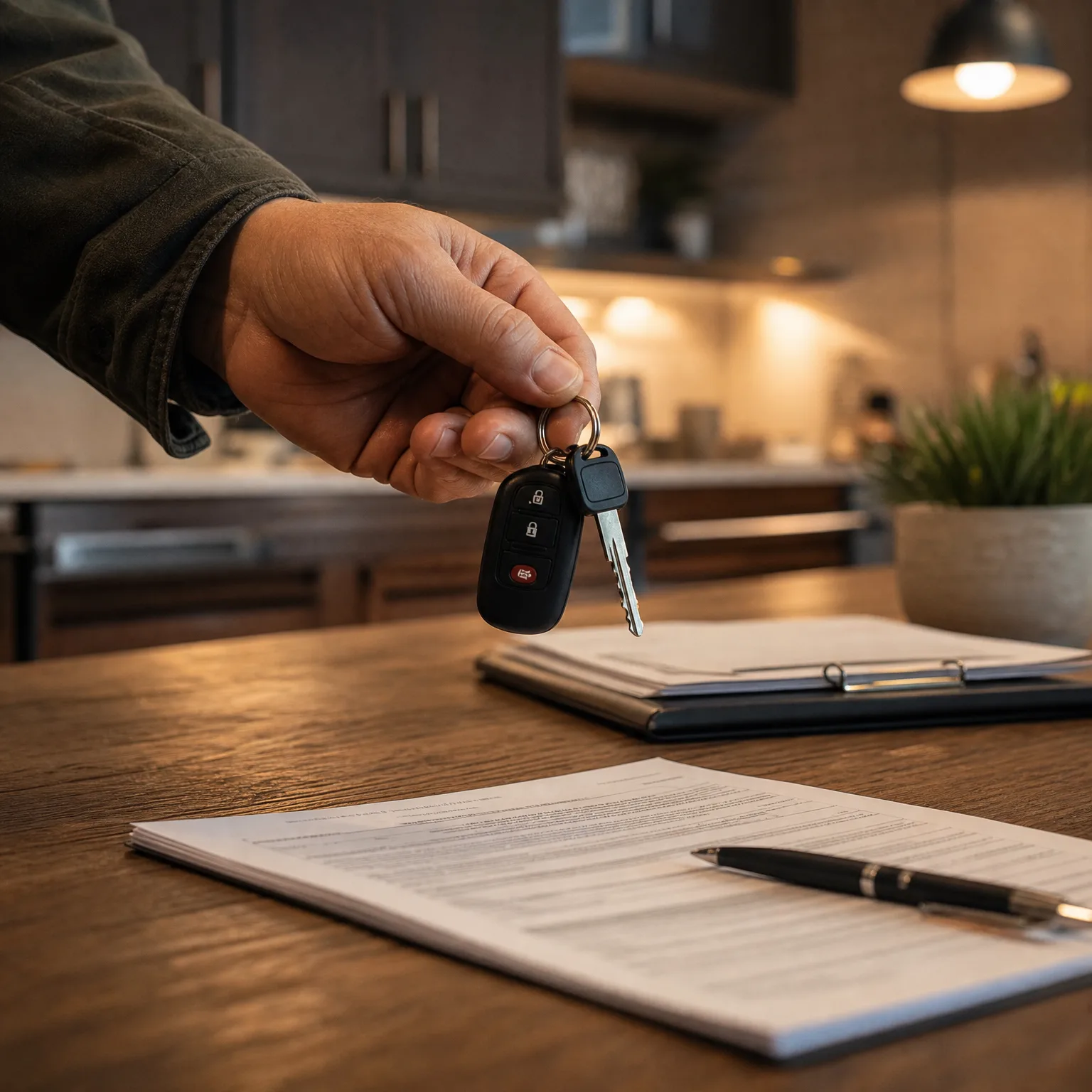
What Happens When You Miss the First Payment After Down Payment
California law requires continuous SR-22 coverage for the entire filing period — typically three years from your reinstatement date for DUI-related suspensions. If your monthly-pay policy lapses because of a missed payment, the carrier is required to notify the DMV electronically within 24 hours. The DMV processes that lapse notification and re-suspends your license automatically. You do not receive a grace period. You do not receive a warning. The lapse triggers immediate re-suspension, and you must start the SR-22 filing clock over from zero once you reinstate coverage.
Monthly-pay policies reduce the upfront barrier but increase the administrative burden of maintaining continuous payment. Set up autopay at policy inception. Most carriers offer a $5 to $10 monthly discount for ACH autopay enrollment, and the automation removes the risk of manual payment failure. If your bank account balance fluctuates unpredictably, request a mid-month payment date rather than accepting the default first-of-month schedule — spreading the payment away from rent and utility due dates reduces overdraft risk.
If you do miss a payment and the policy lapses, call the carrier immediately. Some will allow reinstatement within 72 hours without requiring a new down payment if you pay the overdue amount plus a reinstatement fee, typically $25 to $50. After 72 hours most carriers treat the lapse as a cancellation and require you to reapply as a new customer, which means paying the full down payment again. The DMV does not care whether the lapse was intentional — the three-year SR-22 clock resets regardless of why coverage ended.
3 years
California SR-22 Filing Duration
SR-22 filing must be maintained for three years from the reinstatement date for most DUI-related suspensions in California. A single lapse resets the clock to zero. The three-year period begins the day the DMV processes your SR-22 filing and issues reinstatement, not the day your suspension originally ended.
California Vehicle Code §16070
Why Non-Owner Policies Cost More Than Standard Liability
Non-owner SR-22 policies carry higher premiums than standard owner-operator liability because the pool of drivers requiring them represents elevated actuarial risk. Drivers needing SR-22 filing have demonstrated higher-than-average claims probability through prior violations — DUI convictions, multiple at-fault accidents, uninsured-driving citations, or excessive points accumulation. Carriers price that history into the premium structure.
The non-owner designation adds a second layer of cost. You're insuring your liability exposure when driving vehicles you don't own — typically rental cars, borrowed vehicles, or employer-provided vehicles. Carriers cannot inspect the vehicle, cannot verify maintenance history, and cannot control how frequently you drive. That information asymmetry increases the carrier's risk and pushes the monthly rate higher than a comparable owned-vehicle policy would cost for the same driver. Monthly rates between $85 and $140 reflect both the SR-22 filing requirement and the non-owner structure, not one or the other in isolation.
Compare California Monthly-Pay Non-Owner SR-22 Carriers Now
You've confirmed your suspension requires SR-22 filing. You've confirmed you don't own a vehicle. The next step is comparing which carriers in your county write true month-to-month policies and what the actual down payment and monthly rate look like for your violation type. Progressive and Dairyland both file same-day and accept installment billing, but county-level rate differences can push one carrier $20 to $30 per month cheaper than the other depending on where you live and what triggered your suspension. Request quotes from both before committing to the first option that clears the down-payment threshold — $25 per month over three years is $900 in avoidable cost.
California Carriers Writing Monthly Non-Owner SR-22 Under $100 Down
Progressive writes non-owner SR-22 policies in California with monthly billing and down payments typically between $75 and $95 for drivers with standard DUI or points-triggered suspensions. The SR-22 filing fee is $25 and is included in the first payment. Monthly premiums after the down payment range from $85 to $125 depending on age, violation type, and county. Progressive files electronically with the DMV within one business day of policy activation. Payment methods include ACH autopay, debit card, and credit card. Policies can be purchased online or by phone without an agent requirement.
Dairyland specializes in non-owner SR-22 coverage for California suspended-license drivers and offers monthly billing with down payments between $80 and $110. Monthly premiums range from $90 to $140 after the first payment. SR-22 filing is included at no additional charge and is transmitted to the DMV electronically within 24 hours. Dairyland accepts drivers with DUI, multiple points violations, and lapsed-insurance suspensions. Quotes require a phone call; online quoting is not available for non-owner SR-22 applicants. ACH autopay reduces monthly rates by approximately $5 compared to manual payment.
Get Your Free Quote
Get My California Suspended License Insurance QuoteFrequently Asked Questions
Can I get non-owner SR-22 insurance in California with no down payment?
No California carrier writes SR-22 policies with zero down payment. The lowest down payment available is typically $75 to $95, which covers the first month's premium plus the SR-22 filing fee. Carriers require upfront payment to activate the policy and file the SR-22 certificate with the DMV before your license can be reinstated.
How fast does the DMV receive my SR-22 filing after I pay the down payment?
California carriers file SR-22 certificates electronically with the DMV within one business day of policy activation. The DMV processes the filing within 24 to 48 hours. You can verify receipt by checking your DMV driver record online at dmv.ca.gov three business days after your carrier confirms the filing was transmitted.
What happens to my SR-22 requirement if I move out of California?
California's three-year SR-22 filing requirement follows you if you move to another state. You must notify your carrier of the address change and request they file an SR-22 with your new state's DMV if that state also requires it. Some states do not recognize out-of-state SR-22 filings, which can complicate reinstatement — verify your new state's requirements before moving.
Can I switch carriers in the middle of my three-year SR-22 period?
Yes, but the transition must be seamless. Your new carrier must file the SR-22 with the DMV before your old policy cancels. Any gap in coverage — even one day — triggers automatic license re-suspension and resets your three-year SR-22 clock to zero. Overlap the policies by at least 48 hours to ensure continuous filing.
Do I need non-owner SR-22 if I never plan to drive during my suspension?
If California requires SR-22 filing as a condition of reinstatement, you must maintain the coverage for the full three-year period even if you don't drive. The SR-22 is proof of financial responsibility, not proof you're actively driving. Failing to maintain the filing extends your suspension indefinitely regardless of whether you use the roads.
Will my SR-22 rate go down after the first year if I don't get any new violations?
Some carriers reduce SR-22 premiums after 12 months of continuous coverage with no new violations, but the reduction is typically small — $10 to $20 per month. The three-year filing period itself does not automatically lower your rate. Shopping for a new carrier at the 12-month mark often produces larger savings than waiting for your current carrier's loyalty discount.