
Cheapest Full Coverage SR-22 After DUI — California
Free to compare
Why Full Coverage Quotes Spike After California DUI
Your DUI conviction triggered California's mandatory 3-year SR-22 filing requirement, and you need full coverage to protect a financed vehicle or satisfy a lease agreement. Standard-tier carriers either decline to quote comprehensive and collision entirely for post-DUI drivers, or they price the physical damage portion at catastrophic loss assumptions that push monthly premiums past $500 for a mid-value sedan. The financing agreement does not care about your conviction — it still requires comprehensive and collision until the loan is paid.
The pricing split happens because SR-22 liability-only policies price primarily on violation severity and driving record, while full coverage adds vehicle theft risk, repair cost exposure, and collision claim frequency into the underwriting model. Post-DUI drivers statistically file more collision claims than clean-record drivers, and carriers price that risk aggressively. What most suspended-license drivers miss: non-standard carriers and standard carriers use entirely different actuarial models for physical damage coverage, creating cost variance that has nothing to do with your driving record and everything to do which underwriting tier the carrier occupies.
“Non-standard carriers price post-DUI collision risk against their actual book of high-risk drivers, not as outliers against clean records, creating 40–60% cost variance for identical coverage.”

Get Insured and Get Your California License Back
Get My California Suspended License Insurance Quote$280–$420/mo
Non-Standard Full Coverage Range
Non-standard carriers writing California post-DUI full coverage (Bristol West, Dairyland, Infinity, The General) quote comprehensive and collision in the $280–$420/month range for drivers 25–55 with one DUI and mid-value vehicles. Standard-tier carriers quoting the same risk profile run $450–$650/month when they quote at all.
Based on available carrier rate positioning for California non-standard auto market, 2025
Standard Tier vs Non-Standard Tier Pricing Structure
Standard-tier carriers (State Farm, Allstate, Farmers) build SR-22 pricing on top of their base rate structure, which assumes low-risk drivers and prices violations as temporary surcharges applied to an otherwise clean rate class. When you add comprehensive and collision to a post-DUI SR-22 policy at a standard carrier, the physical damage premium reflects collision claim frequency assumptions built for their core book of business — drivers with clean records. You are being priced as an extreme outlier, and the rate reflects that.
Non-standard carriers (Bristol West, Dairyland, Infinity, The General, National General) build their entire rate structure around high-risk drivers. Their actuarial models assume DUI convictions, lapses, and at-fault accidents as the baseline risk profile, not the exception. When these carriers price comprehensive and collision, they are comparing your post-DUI risk profile against other post-DUI drivers in their book, not against clean-record drivers. The result: physical damage premiums 30–50% lower than standard-tier carriers for the same coverage limits and deductibles.
This is not a quality difference. Non-standard carriers use the same repair networks, the same claims adjusters licensed by California's Department of Insurance, and the same coverage language as standard carriers. The difference is actuarial: they price the risk you represent more accurately because that risk is their core business, not an edge case.
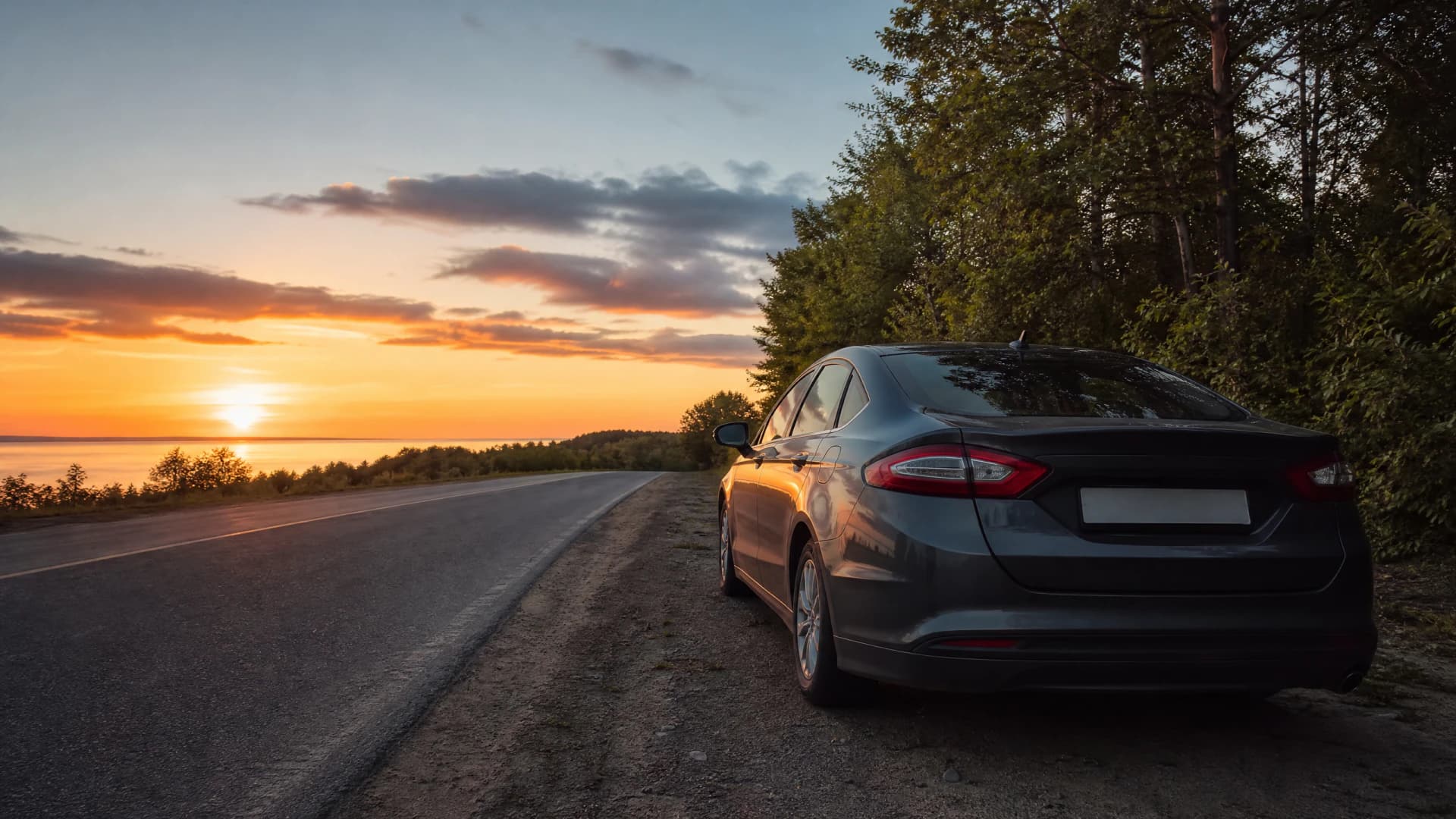
Standard-tier carriers price post-DUI full coverage as an outlier against clean drivers. Non-standard carriers price it as baseline risk against their actual book, creating 40–60% cost variance for identical coverage.




Deductible Strategy for Post-DUI Full Coverage
Comprehensive and collision deductibles directly control your monthly premium. A $500 deductible full coverage policy runs $80–$120/month higher than a $1,000 deductible policy with identical liability limits and the same carrier. Post-DUI drivers financing vehicles often default to $500 deductibles because that is what the finance agreement specifies as the maximum allowable deductible, but most agreements allow up to $1,000 deductibles without requiring lender notification or approval.
The self-insured retention strategy: if you can cover a $1,000 out-of-pocket expense for a collision or comprehensive claim without financial hardship, the $1,000 deductible saves $960–$1,440 annually compared to the $500 deductible. Over the 3-year SR-22 filing period, that difference compounds to $2,880–$4,320 in premium savings. The higher deductible pays for itself after the first claim, and most post-DUI drivers do not file collision claims during the SR-22 period — the conviction itself creates heightened caution that reduces claim frequency.
One structural quirk California drivers miss: comprehensive claims (theft, vandalism, weather damage, animal strikes) do not count as at-fault accidents and do not trigger rate increases at most carriers, but the deductible still applies. If you park in a high-theft-risk ZIP code or commute through rural areas with high animal-strike rates, the $500 deductible becomes more defensible. Check your vehicle's theft rate using the National Insurance Crime Bureau's Hot Wheels report before choosing deductible level — if your make and model appears in California's top 10 stolen vehicles, the lower deductible hedges real risk.
$960–$1,440/year
Premium Savings $1,000 Deductible
Raising your comprehensive and collision deductibles from $500 to $1,000 reduces monthly premiums by $80–$120 for California post-DUI full coverage policies. Over a 3-year SR-22 filing period, the cumulative savings ($2,880–$4,320) exceed the additional out-of-pocket cost on most collision claims.
Liability Limits That Do Not Inflate Full Coverage Cost
California's minimum liability limits (30/60/15) price identically to 50/100/50 limits at most non-standard carriers when you are already buying comprehensive and collision. The liability portion of your SR-22 premium is driven almost entirely by your DUI conviction, not by the per-person or per-accident limit you select. Raising bodily injury limits from $30,000 per person to $50,000 per person adds $8–$15/month at Bristol West, Dairyland, and Infinity — a rounding-error increase that buys $20,000 more protection per injured party.
The structural reason: liability claim severity for post-DUI drivers is not meaningfully reduced by selecting lower limits. If you cause a serious injury accident, the injured party's damages will exceed $30,000 whether your policy limit is $30,000 or $100,000. The carrier's actuarial model prices the probability you cause that accident, not the policy limit you chose. Comprehensive and collision premiums, by contrast, scale directly with vehicle value and repair costs — those are the cost drivers inflating your full coverage quote, not liability limits.
Quote Three Carriers Minimum Before Binding
Non-standard carrier pricing variance for California post-DUI full coverage runs 35–60% for identical coverage, identical driver profiles, and identical vehicles. Bristol West may quote $310/month while Infinity quotes $485/month for the same 32-year-old male with one DUI, a 2019 Honda Civic, and 50/100/50 liability limits with $1,000 deductibles. The variance is not random — it reflects each carrier's current appetite for post-DUI risk in your specific county, their book composition goals for the quarter, and whether your vehicle make and model aligns with their theft and total-loss experience.
The multi-quote requirement is structural, not advisory. Single-carrier shoppers overpay by an average of $140/month compared to drivers who obtain three quotes and bind the lowest. Over the mandatory 3-year SR-22 filing period, that compounds to $5,040 in avoidable premium cost. Request quotes from Bristol West (broker callback required), Dairyland (online instant quote), and Infinity (online instant quote) as the minimum comparison set. Add The General and National General if the first three quotes all land above $400/month — outlier pricing happens and the fourth or fifth carrier often undercuts the pack by $80–$120/month for reasons invisible to the consumer but clear in their underwriting guidelines.
Which California Carriers Write Post-DUI Full Coverage
Bristol West, Dairyland, Infinity, and The General write full coverage SR-22 policies statewide with online quoting available. Bristol West operates broker-required quoting in California, meaning you cannot buy directly online — you request a quote through their agent network and receive callback within 24–48 hours. Dairyland, The General, and Infinity offer direct online quotes with instant bind for full coverage policies. All four price comprehensive and collision in the $280–$420/month range for post-DUI drivers 25–55 with mid-value vehicles and $500–$1,000 deductibles.
Progressive and Geico write SR-22 full coverage in California but price closer to standard-tier assumptions — quotes typically land $380–$520/month for the same driver and vehicle profile. National General writes post-DUI full coverage and prices between non-standard and standard tiers, typically $320–$450/month. Acceptance Insurance writes SR-22 policies but availability for comprehensive and collision varies by underwriting review — not all post-DUI applicants receive full coverage quotes. State Farm writes SR-22 but rarely quotes comprehensive and collision for first-offense DUI drivers within the first 12 months post-conviction.
Get Your Free Quote
Get My California Suspended License Insurance QuoteFrequently Asked Questions
Can I get full coverage with SR-22 immediately after a California DUI conviction?
Yes. Non-standard carriers (Bristol West, Dairyland, Infinity, The General) write full coverage SR-22 policies on the same day as your DUI conviction becomes a matter of record. Standard-tier carriers often impose a 6–12 month waiting period before quoting comprehensive and collision for post-DUI drivers, but non-standard carriers have no waiting period. You can obtain a bindable quote with SR-22 filing the day your court disposition is entered.
Does full coverage cost more than liability-only SR-22 in California?
Full coverage adds $180–$280/month to a liability-only SR-22 policy for mid-value vehicles with $1,000 deductibles. A liability-only SR-22 policy runs $100–$140/month at non-standard carriers for post-DUI drivers. Adding comprehensive and collision brings the total premium to $280–$420/month. The physical damage portion accounts for roughly two-thirds of the full coverage premium, with liability and SR-22 filing representing the remaining third.
Will my full coverage SR-22 premium decrease during the 3-year filing period?
Premiums typically decrease 15–25% at the 12-month policy renewal if you maintain continuous coverage without lapses or new violations. California carriers re-rate post-DUI policies annually, and clean driving during year one reduces actuarial risk scoring. The SR-22 filing requirement itself does not expire until 36 months post-conviction, but your premium drops incrementally at each renewal as time-since-conviction increases and your risk profile improves.
Can I drop comprehensive and collision after paying off my car loan during SR-22?
Yes. Once your lender releases the lien and you receive the title, you can remove comprehensive and collision from your SR-22 policy and maintain liability-only coverage. The SR-22 filing remains active and valid with liability-only coverage. Your premium drops immediately to the $100–$140/month liability-only range. Notify your carrier the same day your loan payoff clears to avoid paying physical damage premiums on an unencumbered vehicle.
Do non-standard carriers cover the same repairs as State Farm or Geico?
Yes. Non-standard carriers use the same California-licensed repair networks, the same claims adjusters, and identical coverage language as standard-tier carriers. The difference is pricing structure and risk appetite, not claims handling or repair quality. Bristol West, Dairyland, Infinity, and The General all pay collision and comprehensive claims through the same body shops State Farm and Geico use. Your repair experience is indistinguishable regardless of carrier tier.
What happens if I let my SR-22 full coverage policy lapse?
Your carrier notifies the California DMV electronically within 24 hours of lapse. The DMV immediately re-suspends your license and requires a new 3-year SR-22 filing period starting from the date you reinstate coverage. The original 3-year clock does not pause — it restarts. A single lapse can extend your total SR-22 filing obligation from 3 years to 5+ years depending on how long the gap lasts before you reinstate coverage.
Can I get full coverage if I do not own a vehicle but need SR-22?
No. Comprehensive and collision coverage insures a specific vehicle you own or lease. If you do not own a vehicle, you need a non-owner SR-22 liability-only policy, which costs $35–$65/month and satisfies California's SR-22 filing requirement without covering any physical vehicle. Full coverage is only available when you list a specific vehicle on the policy as a covered auto.